Experiencing Persian Art

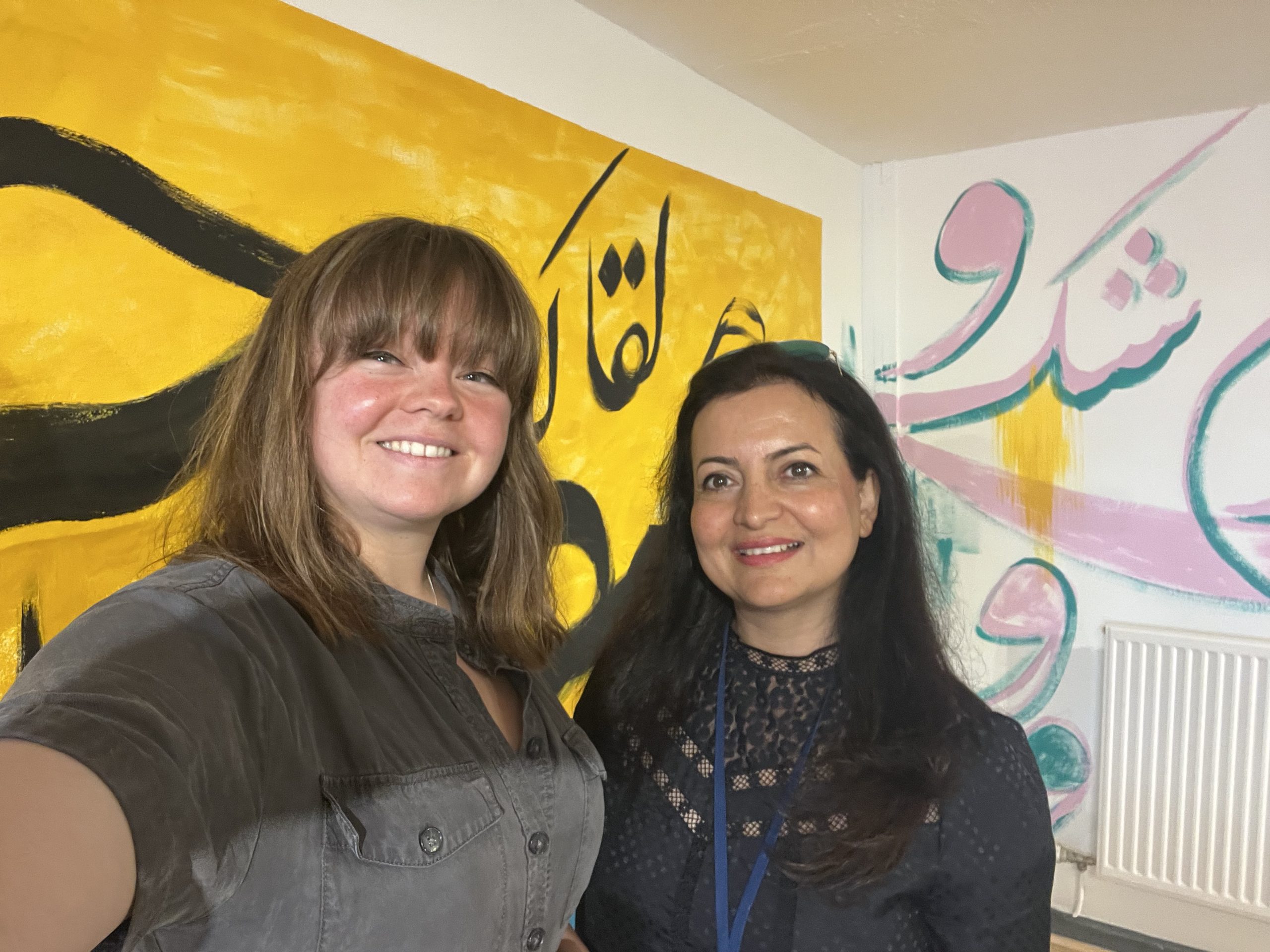
Shadan Roghani, CVS Outreach Programme Development Officer for Diverse Communities was invited to an exhibition at Span Arts Centre in Narberth, West Wales, for an interactive exhibition called Persian Tour. She wrote about her experience below.
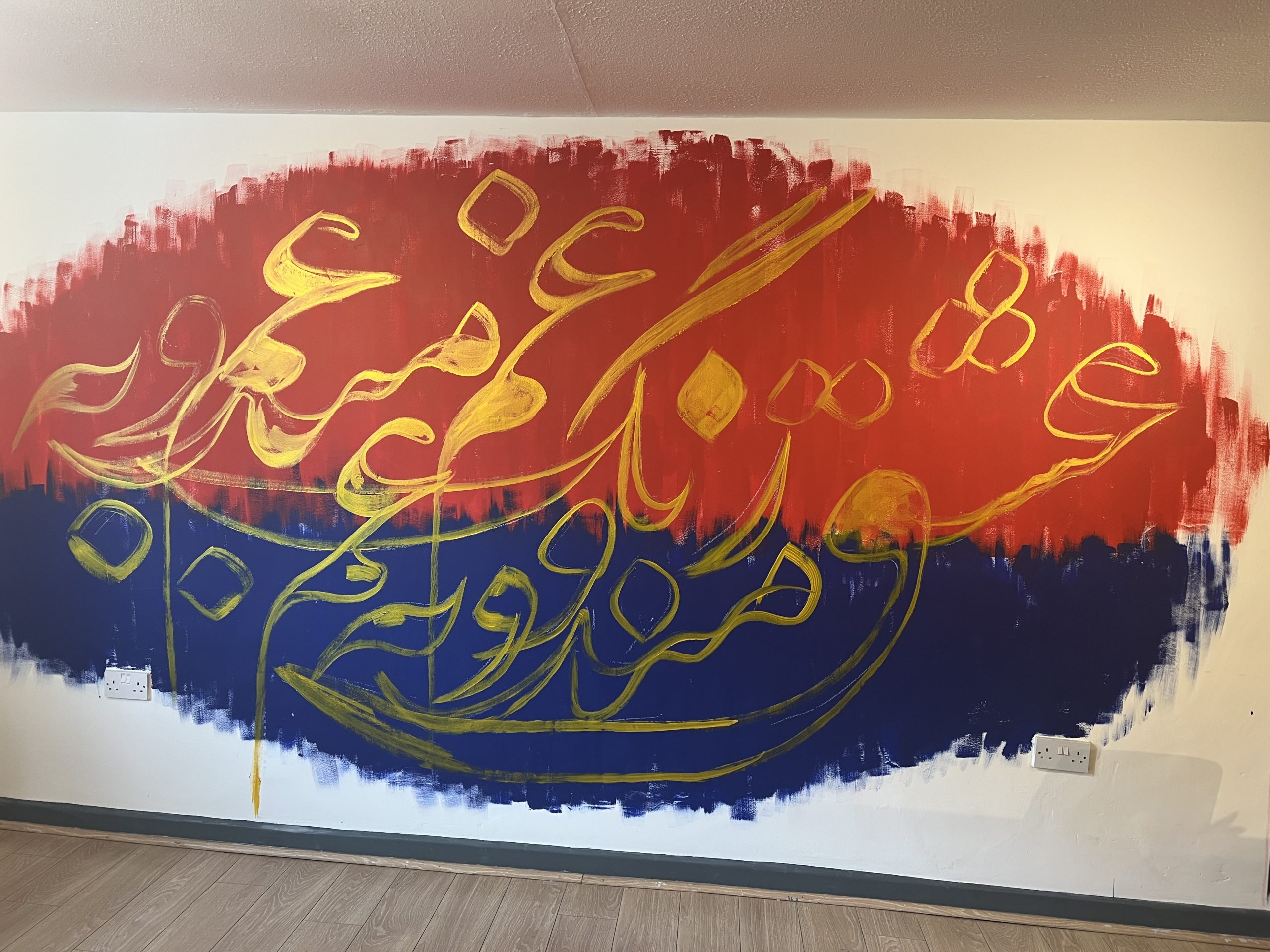
Imagine you step into a room where Persian poetry is displayed directly on the walls in large-scale calligraphy. It allowed my imagination to fly back to Iran, my homeland.
In Iran, you can find many traditional patterns expressed through various art forms, especially in textiles, ceramics, and architecture. These patterns are known for their details, vibrant colours, and rich symbolism, often featuring floral patterns, geometric designs, and animal figures. They are significantly displayed in textiles, carpets, ceramics, and tilework.
You may have heard of Shiraz. Walking inside Span Arts Centre took me to the Tomb of Hafez—called Hafezieh (حافظیه) in Shiraz. Hafezieh is a popular tourist destination and a place of cultural and literary for Iranians. The complex features a garden, pathways, and a tea house that create a peaceful and welcoming atmosphere for visitors. The tomb itself has a beautiful structure that is often illuminated at night and is a focal point of the area.
The colours used in the calligraphy reminded me of the Shah Mosque in Isfahan and Jameh Mosque in Yazd—both outstanding centres for these crafts. The exhibition at Span Arts Centre in Narberth was created by international artist Sahar Saki.
Her work transformed the gallery into a joyful celebration of Persian cultural heritage. Sahar also held interactive workshops where visitors could engage with Persian calligraphy and traditional pattern design. Imagine her workshop, with the scent of rosewater filled the space, and Persian music washed away all the outside noise, allowing visitors to experience Persian culture through all their senses.
At the exhibition, I met several nice people who had come just to see what was happening at the Persian Tour. During our conversations, I found out that one of them used to work for an Iranian bank in London and the other one knew other British people who had worked in oil companies at refineries and visited tourist attractions in Iran. So, the best thing about art is that it can connect people across cultures; and talking to each other felt like bridging languages and backgrounds.
In summary, the Persian Tour at Span Arts was more than just an exhibition for me—it was a meeting place for cultures. In that moment of reflection at the exhibition, I felt more connected to my roots; Iran’s spirit lives on not only through its architecture `or art but also through every warm word passed down through generations.
Persian Tour will continue, if you are interested in experiencing, feeling, and connecting with Persian culture please check Sahar’s upcoming dates and information here: Sept – Oct Future Arts Collective Cymru, Cardiff